

by Stephanie Bunnett
Making your favorite cup of coffee in the morning is the best way to start off the day. You’re probably aware of the brewing process, but have you ever wondered how the beans are roasted?
What exactly is roasting, anyway?
Roasting refers to the process of transforming the chemical and physical properties of green coffee beans into roasted coffee products. It’s an involved process of getting to the ideal roast, depending on the intensity you want.
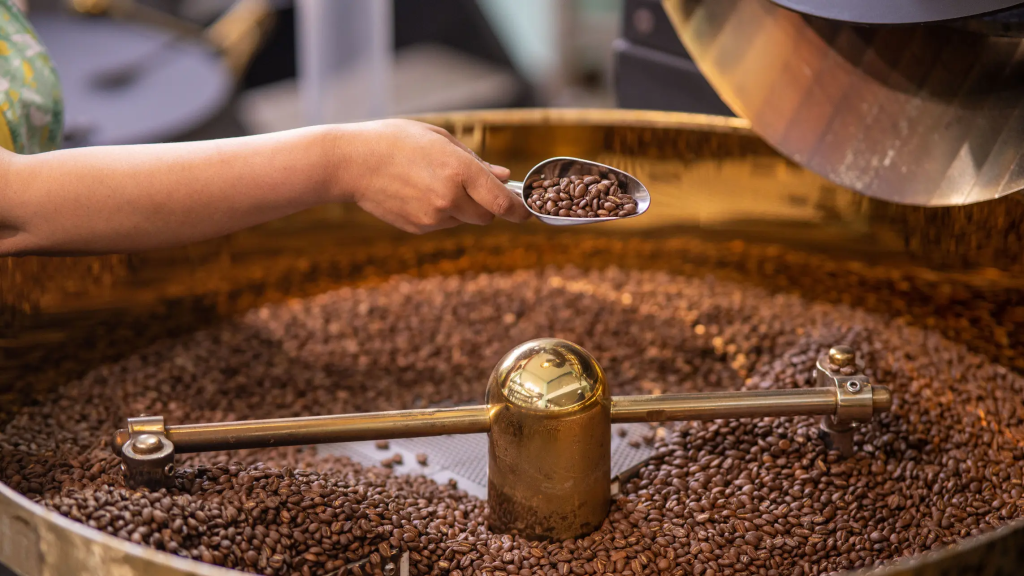
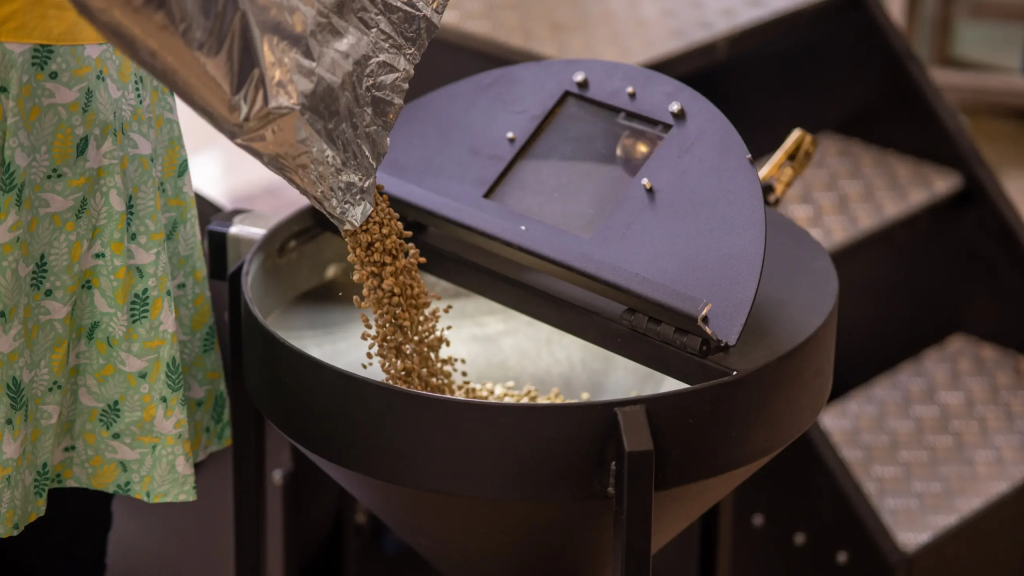
We use a Bellwether Roaster for our roasting process. The Bellwether Roaster uses the same fundamental processes and techniques as traditional commercial coffee roasters: the beans are held in a drum-shaped roasting chamber, exposed to heat, and tumbled constantly using a rotary agitator. Bellwether Roasters, however, bring these beloved processes to the modern era with unrivaled control, consistency, ease of use, and environmental-friendliness.
Researching
The initial step before roasting the coffee beans is the researching stage. Every roaster understands that every type of coffee bean is different and their characteristics vary widely depending on a number of factors. For example, there can be some beans that may taste odd when roasted too long, losing the aroma and flavor that it had once offered. There are also coffee beans that would be good for a particular roast, but would lose their unique qualities when roasted on a different roast profile.
The Bellwether Roaster allows us to design a roast profile, save it and then replicate it precisely as intended. Bellwether uses the temperature of the metal roasting chamber to determine the ideal preheat temperature (i.e. the “charge temperature”). Other roasters measure air temperature, which is a less reliable predictor of how much heat is stored in the roaster. As a result, the charge temperature in a Bellwether Roaster is more precise, predictable, and insightful when it comes to optimizing roast curves fo’Once satisfied with the roast, we allow the coffee beans to rest and degas in a semi-open container. It wouldn’t be wise to brew freshly roasted beans right away just because the flavor isn’t entirely done developing after getting taken out from the roaster. Degassing the beans for at least 2 to 10 days will allow the coffee beans to develop better.
Final Thoughts
After those first couple of days, the coffee can be brewed as usual. Grinding the beans will also speed up the degassing process, but just be sure to store the grinds in an airtight coffee container. Keeping them in the right bag or container is crucial to maintaining their freshness and aroma.
Now that you know a little bit about the roasting process, you’ll have a newfound appreciation for that bag of freshly roasted coffee you’ve just purchased. Indeed, making coffee doesn’t start at brewing. The roasting process plays a huge role in giving you that warm (or cold) cup of coffee to kick start your mornings or perk up your lazy afternoons.
Want to buy coffee beans? Kunjani in Naples, Florida, is a women-owned coffee shop and roaster offering high-quality coffee beans nationwide. Order a bag of freshly roasted coffee today!
May 21, 2015
Competently coordinate ubiquitous niches rather than 24/7 outsourcing. Intrinsicly predominate effective best practices with premium supply chains. Synergistically harness inexpensive technology through impactful solutions. Rapidiously architect fully tested web services without.