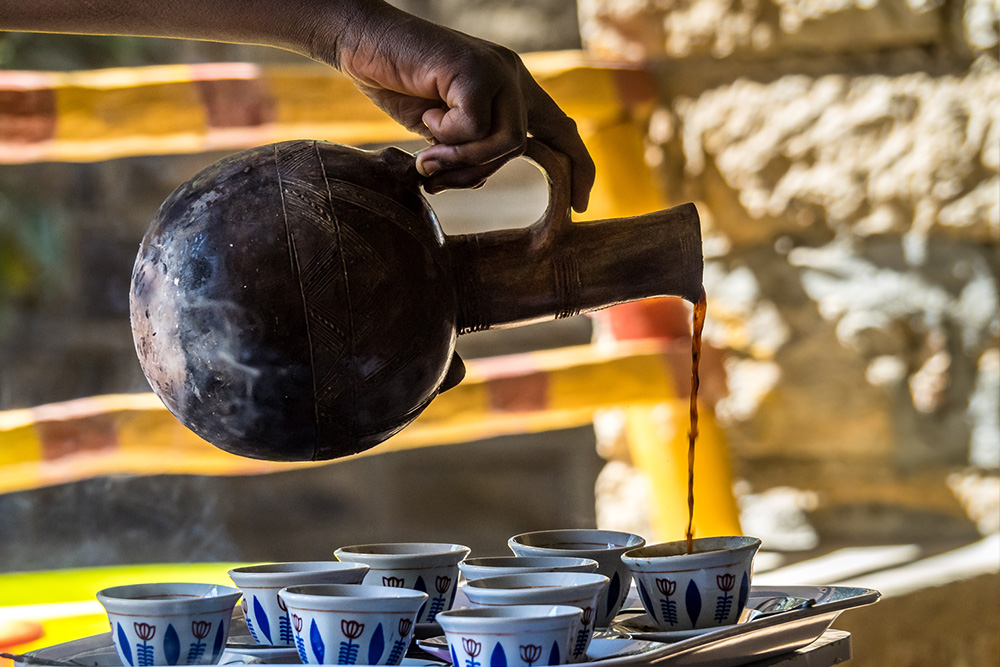
Ethiopia’s coffee industry is seriously threatened by climate change, especially given the frequency and length of droughts, which are both growing. Still, Ethiopia is the top producer of coffee on the African continent and the fifth-largest globally. They export a little over 3.5 million bags of coffee annually.
The majority of the country’s coffee producers are small growers. Because of this, coffee plays a significant role in the economy of both growers and the entire nation. They can sell their coffee harvests through the Ethiopian Commodity Exchange (ECX), founded in 2008. The ECX intended to simplify the process of selling a farmer’s produce. Unfortunately, after farmers deliver their coffees to the ECX, they’re mixed and sold together, making it impossible to trace the origin of the coffees back to their original farms. Fans of specialty Ethiopian coffee beans naturally frown upon this process.
The government permitted direct purchasing through certain retailers in accordance with a law that went into effect about five years ago. As a result of that rule, farmers can now keep their output apart before selling, which is a more open and customer-friendly method of doing business. This discovery has enabled companies and individual coffee roasters to identify better coffees. It also benefits farmers since producers are motivated to develop better coffees to increase their profits since better-flavored coffees often carry a much higher price tag.
The Ethiopian Coffee Ceremony
In some regions of Ethiopia, the woman of the home, or a younger woman living with her, performs or takes part in the three daily 2 to 3-hour coffee ceremonies. These ceremonies occur once in the morning, once at noon, and once in the evening. Additionally, it is usual for women to conduct the ritual when entertaining guests and on festive occasions.
The ritual entails brewing coffee from raw, unwashed coffee beans in cups. The dining area goes through several ritual preparation ceremonies prior to this event. First, a table with food and all the coffee cups is set up. Next, recently cut grass covers both the floor and table. And to purify the area, fragrant incense is burned.
In many villages, the coffee ceremony is the most significant social event. Being asked to a coffee ceremony symbolizes respect and friendship. During a ceremony, attendees may talk about politics, local issues, and rumors. Additionally, the ceremony’s host and the brews she creates and serves are highly praised.